


How much energy does a HotSpring spa really use in Switzerland?
Enjoying a warm, ready-to-use spa all year round naturally requires energy. However, conditions can vary considerably between a spa installed near Lake Geneva and one at a mountain chalet. Thanks to their Energy Smart® design, HotSpring spas are engineered to minimise heat loss and manage energy consumption efficiently, even when outdoor temperatures fall.
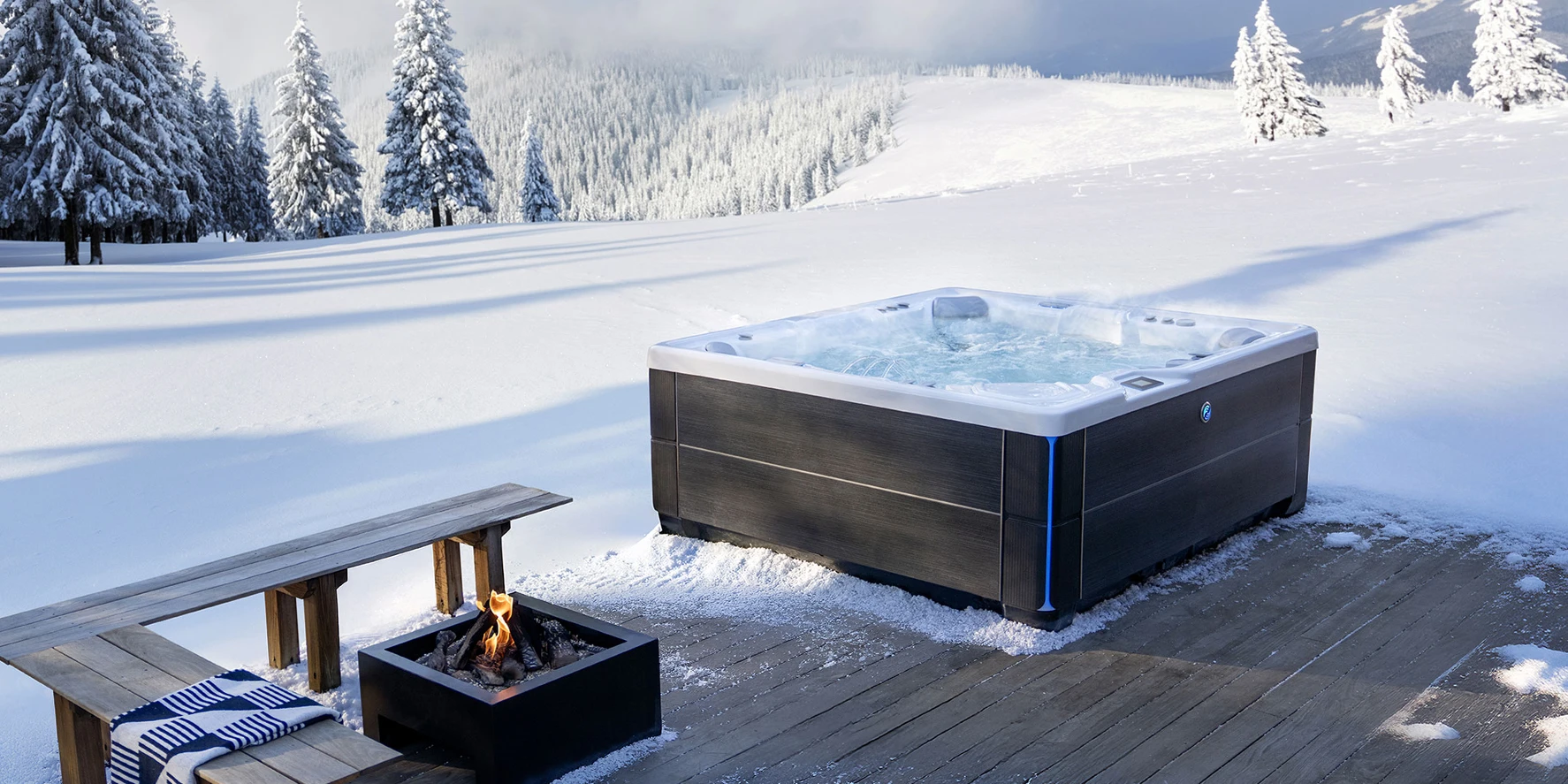
A spa’s energy efficiency depends on much more than its heating system. The quality of its insulation, cover, water circulation and even the design of its base all play an important role in determining how much energy is required to maintain the water temperature.
To better understand this energy consumption, HotSpring has measurements taken under different climate conditions. These figures help illustrate how outdoor temperature affects the energy required to operate a spa.
Energy Smart®: retaining heat rather than replacing it
HotSpring spas combine several technologies designed to minimise heat loss.
On the Highlife® Collection, the shell is insulated with multiple layers of high-density polyurethane foam. This insulation helps retain the heat of the water and reduces the amount of energy required by the heating system.
The cover also plays an essential role. Designed to fit the dimensions of the spa, it incorporates insulating foam cores and a specialised hinge seal to help reduce heat loss when the spa is not in use.
Even the base of the spa contributes to its energy efficiency: its design creates an insulating air space and reduces contact with the cold ground.
Heating and circulation designed for efficiency
The No-Fault™ heater uses a housing and heating element designed to optimise heat transfer to the water.
At the same time, the SilentFlo 5000™ circulation pump continuously circulates the water while using very little electricity. According to HotSpring, it uses less energy than a 40-watt light bulb.
Together, these technologies contribute to the HotSpring Energy Smart® system. HotSpring models meet or exceed the energy-efficiency requirements of the California Energy Commission (CEC) and the APSP 14 standard for portable spas.
How much energy does a spa use in different climates?
HotSpring publishes estimates based on different average annual ambient temperatures. The US tests were carried out on a medium-sized Highlife® spa maintained at approximately 39 °C and used six times per week.
For the Swiss market, we have selected four particularly relevant values to illustrate the influence of climate conditions on energy consumption.
| Average annual temperature | Indicative type of region | Average consumption* |
|---|---|---|
| 4 °C | Mountain regions | 253 kWh/month |
| 10 °C | Swiss Plateau and mid-altitude regions | 210 kWh/month |
| 12 °C | Lowland and Lake Geneva regions | 188 kWh/month |
| 15 °C | Particularly mild climate | 166 kWh/month |
* The energy consumption figures shown are based on HotSpring laboratory tests conducted and measured under controlled conditions. The data is based on a medium-sized spa from the Highlife® Collection, set to 39 °C (102 °F) and used six times per week for 30 minutes per session: 15 minutes with the jets running and 15 minutes without the jets. The tests were carried out by an independent certified laboratory in a controlled climate chamber at different ambient temperatures. Electricity consumption, temperature and humidity were continuously measured using calibrated equipment. Actual energy consumption may vary depending on the selected water temperature, usage habits and actual ambient conditions.
Putting these figures into the context of the Swiss climate
As a point of reference, the average annual temperature across Switzerland reached 7.0 °C in 2025. This national average naturally conceals significant differences between lowland regions, the Lake Geneva area and mountain regions.
It also reflects the general trend towards higher temperatures observed in recent years. The values in the table should therefore be considered reference points illustrating the influence of climate on energy consumption rather than strict geographical categories.
European measurements confirm the importance of insulation
Tests carried out specifically on the Aria® model from the Highlife® Collection also demonstrate the influence of outdoor temperature.
With the water maintained at 38 °C, measured weekly energy consumption during use increases from 43.05 kWh at an ambient temperature of 16 °C to 58.81 kWh at 7.5 °C.
As the protocol used for these European tests differs from the one used for the monthly estimates above, the figures should not be compared directly. They nevertheless illustrate the same principle: the greater the difference between the water temperature and the outdoor air temperature, the more important the quality of the spa’s insulation becomes.
What about solar panels?
For a home equipped with a photovoltaic system, part of the electricity required to operate the spa can be supplied by solar energy.
The actual running cost then depends heavily on the system’s electricity production, the level of self-consumption, the season and the electricity tariff. For this reason, we believe it is more relevant to present energy consumption in kWh rather than as a monthly cost in Swiss francs.
Two spas consuming the same amount of energy can therefore have very different running costs depending on the home’s electrical and solar installation.
Energy consumption also depends on how you use your spa
The figures shown remain indicative. Actual consumption depends on several factors, including the model selected, water temperature, frequency and duration of use, use of the jets, climate conditions and the environment in which the spa is installed.
Beyond the technical performance of the spa itself, its location, correct use of the cover and the habits of its users can therefore also influence energy consumption.
RM-Spas can help you choose the right HotSpring spa and advise you on its installation so that you can enjoy your spa throughout the year while keeping energy consumption under control.